

Virtual Mozart, Venture Capital Bot, and Educational Video Generation: How AI is Used at HSE University

In mid-November, HSE University hosted a meetup where faculty, researchers, and administrators presented their projects and shared experiences with using AI technologies in education and research. The meeting was part of the continuing professional development programme 'Artificial Intelligence in Education and Research.'
The 'Artificial Intelligence in Education and Research' project supports the initiatives of university staff aiming to leverage advanced technologies to enhance the quality of education and scientific research. The project is carried out within the framework of the Priority 2030 Strategic Academic Leadership Programme.
Redesigning a Venture Capital Course Using AI Elements
Alexander Semenov, Associate Professor at the School of Finance, Faculty of Economics Sciences, shared his experience using artificial intelligence to redesign a course in Venture Capital. One of the primary goals of using AI was to enhance students' understanding of the financial investment market and innovative business practices.
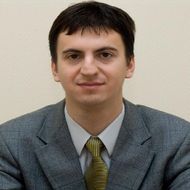
Alexander Semenov
For this purpose, a virtual assistant was developed based on the psychologist chatbot Anna that interacts with students, helping them answer challenging questions and become more psychologically prepared to engage with investors. The use of this virtual assistant has enhanced the quality of student training and introduced new tools for discussing the psychological aspects of entrepreneurship.
AI Simulacra for a Figital Art Course
Evgeniya Evpak, Research Assistant at the HSE ISSEK Laboratory for Economics of Innovation and visiting lecturer at the HSE Art and Design School, presented a project centred on integrating AI simulacra into a course on figital art.

Evgeniya Evpak
The project’s main idea was to create virtual avatars of historical figures, such as Plato, Jean Baudrillard, and Wolfgang Amadeus Mozart, to facilitate educational dialogues with students. These avatars were created using the Hedra and GigaChat neural networks, enabling the integration of gamification elements into the educational process and the creation of an interactive environment for studying figital art and its theoretical foundations. This approach will not only save time in creating educational video materials but also make learning more engaging for students.
AI Tools for Teaching Foreign Languages
Natalia Ryapina, Senior Lecturer at the School of Foreign Languages, HSE Campus in Perm, shared her experience using AI to teach foreign languages.

Natalia Ryapina
The main focus was on using multimodal AI tools, such as Gamma and EdrawMind, which help adapt educational materials and contribute to their comprehension by students. Generating content in various formats (video, audio, text) using artificial intelligence caters to students with different learning styles, increasing their engagement in the educational process and helping them immerse themselves more deeply in the material.
Integration of AI in Educational Activities
Ksenia Fimina, Senior Lecturer at the HSE School of Applied Mathematics, demonstrated how artificial intelligence can optimise the creation of educational materials.

Ksenia Fimina
In her work, she uses AI tools like Narakeet and Invideo AI, which reduce the time required to create presentation-quality videos by more than tenfold. AI tools offer teachers a wide range of ready-made templates and ideas for visually presenting lecture material, helping make the educational process more engaging and accessible for students. Ksenia Fimina also uses neural network technologies in developing a digital assistant for medical researchers as part of the Smart Medicine project.
Using AI to Examine the Narrative Structure of a Text
Marharyta Fabrykant, Senior Research Fellow at the Expert Institute's Laboratory for Comparative Studies in Mass Consciousness, presented the results of a study on using AI tools to analyse the emotional tone of a text and examine its narrative structure.

Marharyta Fabrykant
The project employed emotional dynamics analysis using the NLTK library to study the ancient epic of Gilgamesh. The study revealed patterns in the emotional structure of the text, confirming hypotheses about the rise and fall of emotional intensity at key moments of the narrative. Marharyta Fabrykant's project demonstrates the potential of using AI technologies for objective analysis of complex texts, which is highly significant for conducting humanities research.
The ‘Artificial Intelligence in Education and Research’ is a continuing professional development programme implemented by the HSE Faculty of Computer Sciences' Continuing Education Centre and the HSE Centre for Staff Continuing Professional Development.
See also:

First Digital Adult Reading Test Available on RuStore
HSE University's Centre for Language and Brain has developed the first standardised tool for assessing Russian reading skills in adults—the LexiMetr-A test. The test is now available digitally on the RuStore platform. This application allows for a quick and effective diagnosis of reading disorders, including dyslexia, in people aged 18 and older.
HSE Scientists Explain How to Identify Brain Areas Critical for Language Function During Surgery
The HSE Centre for Language and Brain conducted a course on tractography, a method that enables visualisation of key brain connections and helps surgeons avoid damaging language-critical areas during surgery. The course was attended by neurosurgeons and radiologists from Moscow and other Russian regions who are interested in methods of preoperative language mapping.
Forbes University Ranking: HSE Has Top Reputation among Employers
On May 22, Forbes Education released its updated ranking of the 100 best universities in Russia for 2025. HSE University retained its second-place position, having established itself as the university with the highest employer reputation. Among the top 20 were 12 universities from Moscow, three from St Petersburg, two from Tatarstan, and one each from the Sverdlovsk, Novosibirsk, and Tomsk regions.
HSE and Sichuan University Sign Cooperation Agreement
On May 20, 2025, HSE University hosted an official delegation from Sichuan University headed by President Wang Jinsong. During the meeting, the universities signed a cooperation agreement.
Interactive Workshops, Thematic Quizzes, and New Partnerships: HSE Delegation Visits Mongolia
Representatives of HSE University visited the Mongolian capital, Ulaanbaatar. The visit focused on developing cooperation in the fields of education and science, as well as introducing Mongolian school pupils and students to the educational opportunities available at one of Russia’s leading universities.
'The Branch of Medicine That Our Developments Primarily Target Is Cardiology'
The application of mathematical models to the diagnosis and treatment of cardiovascular diseases contributes to the effective detection of patient predispositions and supports the selection of best treatment strategies. The use of mathematical models helps create new diagnostic tools and train neural networks to assist clinicians. Researchers from HSE University and colleagues from Saratov State Medical University are engaged in this work as part of the Mirror Laboratories project. In this interview, Natalya Stankevich, Senior Research Fellow at the International Laboratory of Dynamical Systems and Applications of the HSE Campus in Nizhny Novgorod, talks about what the collaboration has achieved so far.
Centre for Language and Brain Begins Cooperation with Academy of Sciences of Sakha Republic
HSE University's Centre for Language and Brain and the Academy of Sciences of the Republic of Sakha (Yakutia) have signed a partnership agreement, opening up new opportunities for research on the region's understudied languages and bilingualism. Thanks to modern methods, such as eye tracking and neuroimaging, scientists will be able to answer questions about how bilingualism works at the brain level.
HSE and Vietnam National University to Establish Joint Research Institute
A cooperation agreement has been signed in Moscow between HSE University and Vietnam National University, Hanoi (VNU). The document was signed during the official visit of a Vietnamese delegation to celebrations marking the 80th anniversary of Victory Day and negotiations involving President of the Russian Federation Vladimir Putin and General Secretary of the Central Committee of the Communist Party of Vietnam Tô Lâm. The agreement was signed by HSE Rector Nikita Anisimov and VNU Rector Le Quan.
HSE and Tsinghua University Strengthen Russia–China Partnership as part of Cross Year of Education
On May 10, a delegation from Tsinghua University—one of China’s leading higher education institutions—paid an official visit to HSE University. The delegation was led by Qiu Yong, Secretary of the CPC Tsinghua University Committee, former President and Chair of the University Council, and member of the Chinese Academy of Sciences.
HSE University Signs Cooperation Agreements with Leading Chinese Universities
On May 8, 2025, in Moscow, in the presence of Russian President Vladimir Putin and Chinese President Xi Jinping, strategic agreements were signed between the HSE University and two of China's top institutions, Peking University and Tsinghua University. The event was attended by Nikita Anisimov, Rector of HSE University, Qiu Yong, Secretary of the CPC Tsinghua University Committee, and Gong Qihuang, President of Peking University. The signing unfolded during the official visit of the Chinese delegation to Russia, coinciding with the commemoration of the 80th Anniversary of Victory Day.