


Z-Flipons: How Specific DNA Regions Help Regulate Gene Function
Researchers at HSE University and InsideOutBio have applied machine learning to identify the location and functions of mirror-twisted DNA structures, known as Z-flipons, in human and mouse genomes. The scientists discovered which Z-DNA regions were conserved in both species throughout evolution and demonstrated for the first time that Z-DNA accelerates the process of creating RNA copies of genes. The findings will contribute to the development of new treatments for genetic diseases. The study has been published in Scientific Reports.

HSE Researchers Develop Python Library for Analysing Eye Movements
A research team at HSE University has developed EyeFeatures, a Python library for analysing and modelling eye movement data. This tool is designed to simplify the work of scientists and developers by enabling them to efficiently process complex data and create predictive models.

Scientists Identify Fifteen Key Motives Driving Human Behaviour
Researchers at HSE University and the London School of Hygiene and Tropical Medicine have identified 15 key motives that drive human behaviour. By analysing people's views, preferences, and actions through an evolutionary lens, they demonstrated how these motives intertwine to shape habits and interpersonal relationships. The findings have been published in Personality and Individual Differences.
HSE Neurolinguists Create Russian Adaptation of Classic Verbal Memory Test
Researchers at the HSE Centre for Language and Brain and Psychiatric Hospital No. 1 Named after N.A. Alexeev have developed a Russian-language adaptation of the Rey Auditory Verbal Learning Test. This classic neuropsychological test evaluates various aspects of auditory verbal memory in adults and is widely used in both clinical diagnostics and research. The study findings have been published in The Clinical Neuropsychologist.
Tickling the Nerves: Why Crime Content is Popular
Consumers of content about serial killers watch and read it to experience intense emotions that are often lacking in everyday life and to understand the reasons that drive people to commit crimes. However, such content does not contribute to increased aggression. These conclusions were drawn by sociologists from HSE University. The results of their study have been published in Crime, Media, Culture: An International Journal.
HSE Researchers Prove the Existence of Nash Equilibrium for a New Class of Problems in Game Theory
Researchers at HSE University's St Petersburg School of Economics and Management have been exploring methods for the efficient allocation of resources in systems involving multiple players. The scientists have proven the existence of strategies for optimal decision-making in competition for limited, discrete resources in four different cases. The developed mathematical model can be applied in various fields, ranging from education and medicine to managing networks and computing power. The paper has been published in Games and Economic Behaviour.

Researchers at HSE Centre for Language and Brain Reveal Key Factors Determining Language Recovery in Patients After Brain Tumour Resection
Alina Minnigulova and Maria Khudyakova at the HSE Centre for Language and Brain have presented the latest research findings on the linguistic and neural mechanisms of language impairments and their progression in patients following neurosurgery. The scientists shared insights gained from over five years of research on the dynamics of language impairment and recovery.
Neuroscientists Reveal Anna Karenina Principle in Brain's Response to Persuasion
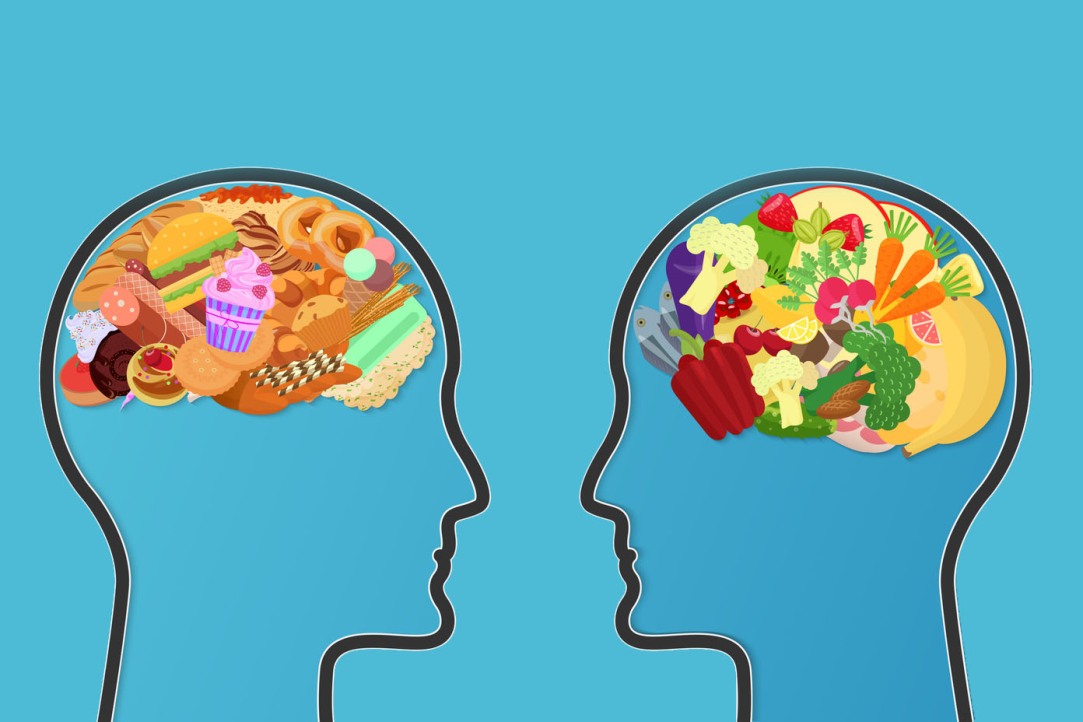
A team of researchers at HSE University investigated the neural mechanisms involved in how the brain processes persuasive messages. Using functional MRI, the researchers recorded how the participants' brains reacted to expert arguments about the harmful health effects of sugar consumption. The findings revealed that all unpersuaded individuals' brains responded to the messages in a similar manner, whereas each persuaded individual produced a unique neural response. This suggests that successful persuasive messages influence opinions in a highly individual manner, appearing to find a unique key to each person's brain. The study findings have been published in PNAS.

Russian Scientists Improve Water Purification Membranes Using Metal Ions
Researchers have proposed using polymer membranes modified with copper, zinc, and chromium metal ions for water purification. These polymers were used for the first time in water purification via electrodialysis. Copper-based membranes demonstrated record selectivity for monovalent ions, opening new possibilities for sustainable water recycling. The study has been published in the Journal of Membrane Science.
.jpg "Independent Experts More Effective Than Collective Expertise in Decision-Making Under Uncertainty")
Independent Experts More Effective Than Collective Expertise in Decision-Making Under Uncertainty
A collaborative study by Sergey Stepanov, Associate Professor at the HSE Faculty of Economic Sciences and ICEF, and experts from INSEAD Business School and NYU Shanghai, indicates that in making decisions under high uncertainty, where it is unclear which choice is superior, advice from independent experts may be more beneficial than a collective opinion from a group of experts. The study has been published in Games and Economic Behavior.
Registration is open until October 4, 2025