

‘University Life in Partnership with Artificial Intelligence’

HSE University is one of the leaders in IT education and research in the field of artificial intelligence (AI). Thanks to this, the university recently received the highest grant of the Priority 2030 programme. The integration of AI technologies into education is set to become a strategic direction for the university’s development over the next five years. What changes are coming to HSE University in this regard and how they will affect students and teachers? These issues were discussed at a meeting of HSE University’s Academic Council on December 20.
At the beginning of the meeting, HSE University Rector Nikita Anisimov noted that the university had proven its leading position in the first group of the ‘Research Leadership’ area of the Priority 2030 programme and received the largest grant.
He outlined and commented on eight points characterising HSE University’s development in 2023, which formed the basis of his report at the meeting of the Programme Council:
connecting social and humanitarian knowledge with digital sciences
capitalisation of accumulated scientific potential
creating human-oriented technologies through strategic projects
maintaining high standards of education quality
youth development for the country’s sustainable future
development of the management system to ensure the university’s sustainability
ensuring a contribution to supporting youth and the development of education and science in Russia’s regions
maintaining the position of a world-class national research university in the new geopolitical conditions
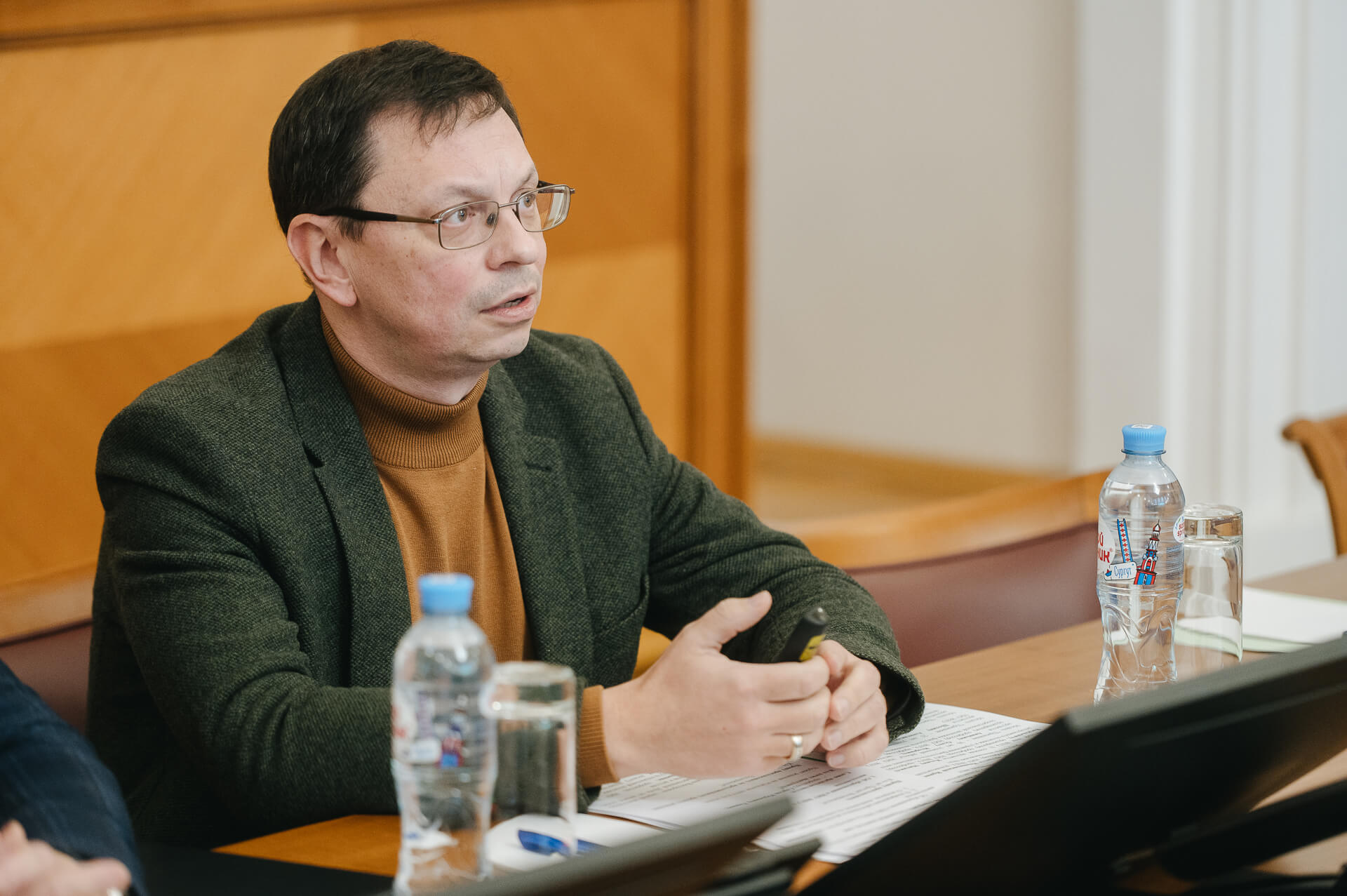
One of the Priority 2030 Council’s recommendations was to focus more on AI technologies for people. ‘In conditions where no one has any doubts about the role and value of artificial intelligence technologies for the further existence of humanity, we need to understand how it will become part of our large community’s life,’ said Nikita Anisimov.
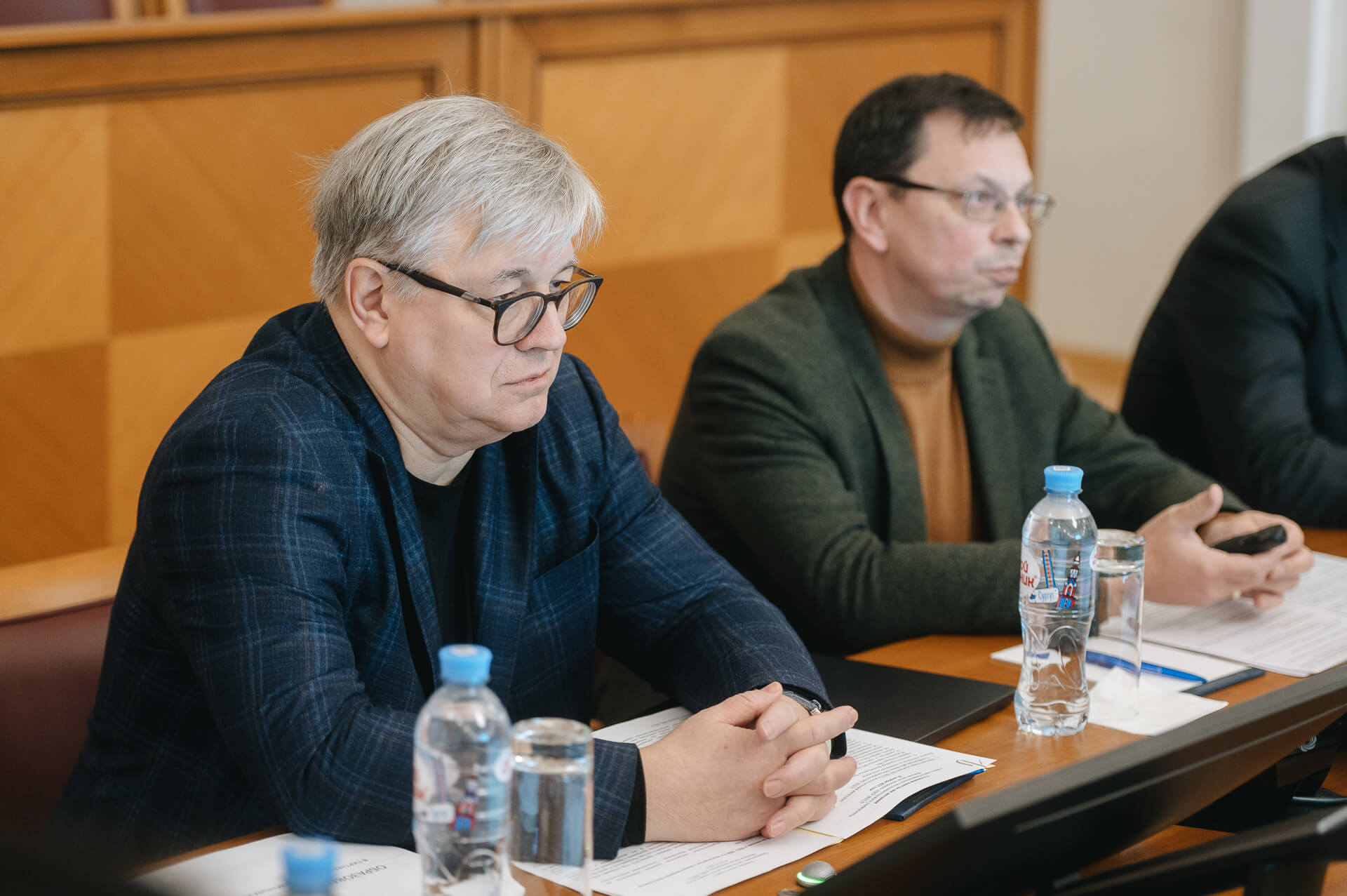
As Yaroslav Kuzminov, HSE University’s Academic Supervisor, emphasised, ‘HSE University is practically the only university that has retained the scale of financial support from previous years due to the fact that we acted impeccably in cooperation with the Ministry of Digital Development of Russia by participating in the Digital Departments project.’
HSE University’s Vice Rector Sergey Roshchin gave a report on AI, the main item on the meeting agenda.
According to him, the university realised earlier than others that everyone should have digital competencies, and today HSE University is virtually an information technology university. The number of bachelor’s and master’s programmes that are in one way or another related to computer science is larger than the number of programmes in economics and management.
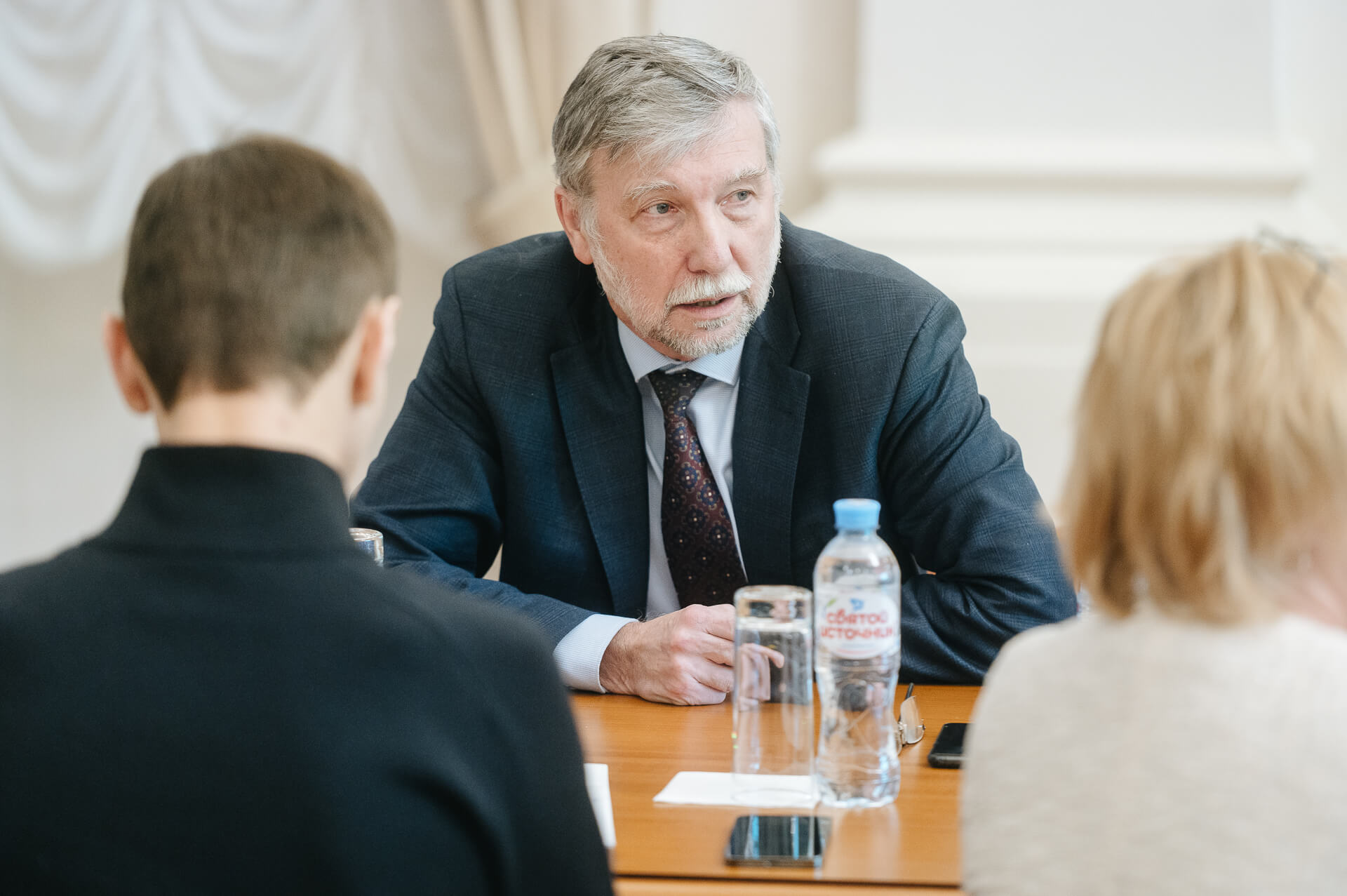
Sergey Roshchin suggested treating existing achievements as prerequisites for further development. ‘There is quite a serious turn ahead,’ he said.
In the near future, they plan to update the Data Culture project, under which all students of bachelor’s programmes will receive digital competencies. One component of the project will be changed this academic year as an experiment, then next year systematically. Students will have to study data analysis, methods of working with AI, and generative models in various fields—from design and Asian studies to management and law.
The developments of the Data Culture project will be transferred to a major (part of the main educational programme that forms the knowledge system in the main area of training), where courses related to the use of AI will appear. According to Sergey Roshchin, only 5% of disciplines currently cover interaction with various elements of AI.
The space of programmes whose graduates have subject and instrumental competencies and can apply these competencies in the selected subject areas will expand. There are already many such programmes at the master’s and bachelor’s levels, such as Computational Social Sciences.
Generative models should become part of students’ learning toolset—they can be used in projects, coursework, and graduation papers. In addition, students will have the opportunity to take part in projects to test technologies for identifying generative models.
Updating the skills, abilities, and competencies of teachers is another large-scale task which will allow the university to remain competitive. ‘2024 should be a year of large-scale retraining of teaching staff,’ concluded Sergey Roshchin.
Artificial intelligence should also be utilised to assist teachers by performing routine tasks. For example, an AI evaluator is being developed based on an array of data from independent exams within the framework of the Linguatest certification testing system implemented by HSE University.
According to the speaker, HSE University should become a university where artificial intelligence permeates all subject areas. The university’s online campus has already engaged in reworking all AI-related aspects, and this work needs to be implemented at the four traditional campuses as well.



There is also an ethical aspect of using AI in the educational process. Sergey Roshchin proposed the formulation of an ethical code within HSE University, which will be the first regulation of how different participants in the educational process interact with AI.
Commenting on the report, Nikita Anisimov noted that the discussion is about a very serious area in which ‘we take responsibility not just for the introduction of education in the field of artificial intelligence at the university, but for the life of the university in partnership with artificial intelligence.’
See also:

Scientists Discover That the Brain Responds to Others’ Actions as if They Were Its Own
When we watch someone move their finger, our brain doesn’t remain passive. Research conducted by scientists from HSE University and Lausanne University Hospital shows that observing movement activates the motor cortex as if we were performing the action ourselves—while simultaneously ‘silencing’ unnecessary muscles. The findings were published in Scientific Reports.
HSE Scientists Reveal What Drives Public Trust in Science
Researchers at HSE ISSEK have analysed the level of trust in scientific knowledge in Russian society and the factors shaping attitudes and perceptions. It was found that trust in science depends more on everyday experience, social expectations, and the perceived promises of science than on objective knowledge. The article has been published in Universe of Russia.
IDLab: Fascinating Research, Tough Deadlines, and Academic Drive
The International Laboratory of Intangible-driven Economy (IDLab) was established at the HSE campus in Perm 11 years ago. Its expertise in data processing and analysis allows researchers to combine fundamental studies with applied projects, including the development of risk and cybersecurity models for Sber. The head of the laboratory, Professor Petr Parshakov, and Senior Research Fellow Professor Mariya Molodchik spoke to the HSE News Service about IDLab’s work.
HSE Lecturers Awarded Yandex ML Prize 2025
The Yandex ML Prize is awarded to lecturers and heads of educational programmes who contribute to the development of artificial intelligence in Russia. This year, 10 laureates were selected from 300 applicants, including three members of the HSE Faculty of Computer Science (FCS). A special Hall of Fame award was also presented for contributions to the establishment of machine learning as an academic field. One of the recipients was Dmitry Vetrov, Research Professor at the HSE FCS.
HSE University and Banking and Finance Academy of Uzbekistan Sign Memorandum on Scientific Cooperation
The partnership aims to foster academic collaboration in the fields of global economics, sustainable development, and Islamic finance. Strengthening academic ties with Uzbekistan represents a promising direction for scientific exchanges and the implementation of international projects in sustainable development.
HSE Scientists Optimise Training of Generative Flow Networks
Researchers at the HSE Faculty of Computer Science have optimised the training method for generative flow neural networks to handle unstructured tasks, which could make the search for new drugs more efficient. The results of their work were presented at ICLR 2025, one of the world’s leading conferences on machine learning. The paper is available at Arxiv.org.
Neural Network Trained to Predict Crises in Russian Stock Market
Economists from HSE University have developed a neural network model that can predict the onset of a short-term stock market crisis with over 83% accuracy, one day in advance. The model performs well even on complex, imbalanced data and incorporates not only economic indicators but also investor sentiment. The paper by Tamara Teplova, Maksim Fayzulin, and Aleksei Kurkin from the Centre for Financial Research and Data Analytics at the HSE Faculty of Economic Sciences has been published in Socio-Economic Planning Sciences.
‘To Help Make the World More Sustainable, Fair, and Humane’
The BRICS International School: New Generation has concluded at HSE University, bringing together more than 100 participants from 38 BRICS and Global South countries. The attendees included early-career researchers, diplomats, entrepreneurs, journalists, and civil society representatives.
Larger Groups of Students Use AI More Effectively in Learning
Researchers at the Institute of Education and the Faculty of Economic Sciences at HSE University have studied what factors determine the success of student group projects when they are completed with the help of artificial intelligence (AI). Their findings suggest that, in addition to the knowledge level of the team members, the size of the group also plays a significant role—the larger it is, the more efficient the process becomes. The study was published in Innovations in Education and Teaching International.
Advancing Personalised Therapy for More Effective Cancer Treatment
Researchers from the International Laboratory of Microphysiological Systems at HSE University's Faculty of Biology and Biotechnology are developing methods to reduce tumour cell resistance to drugs and to create more effective, personalised cancer treatments. In this interview with the HSE News Service, Diana Maltseva, Head of the Laboratory, talks about their work.